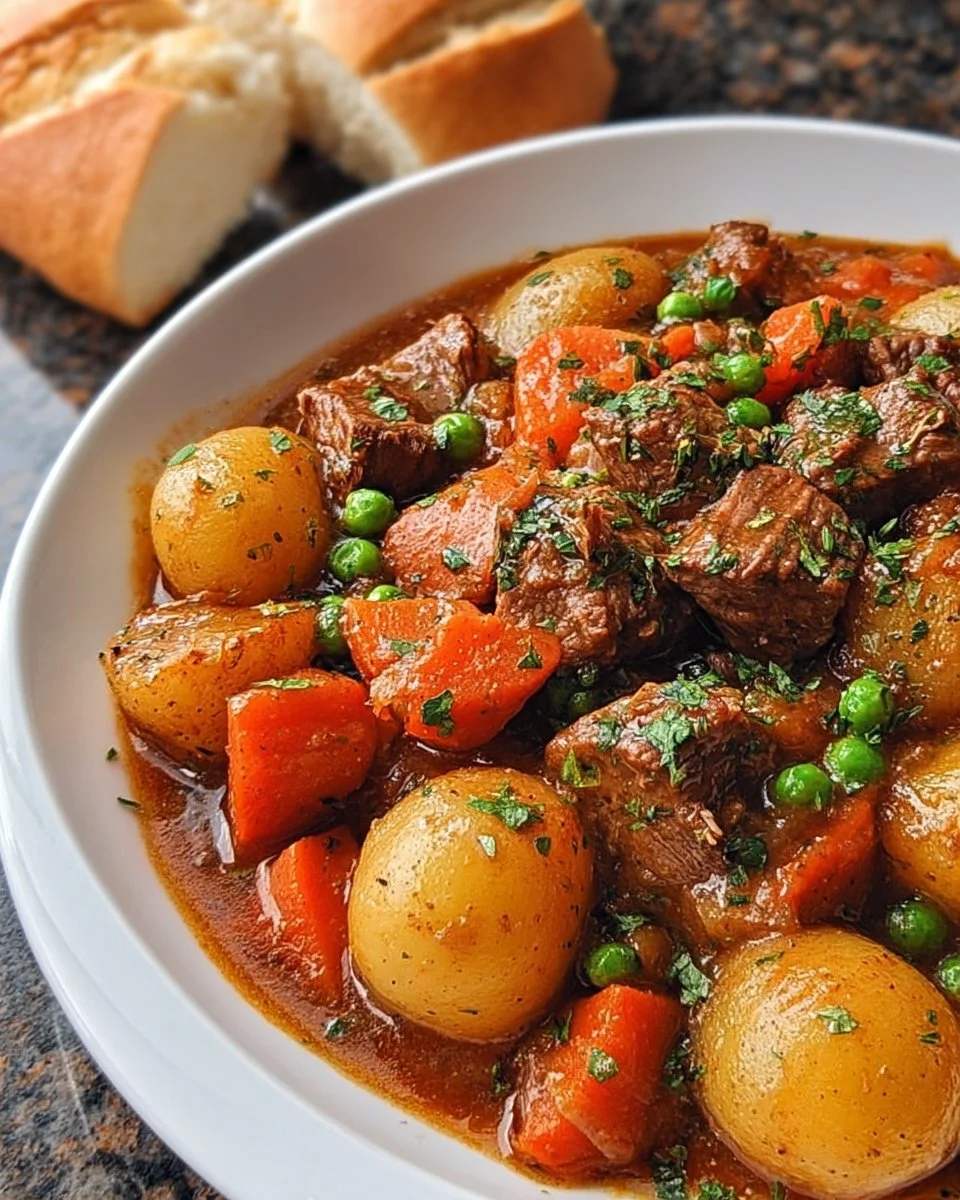
The mere mention of Irish stew conjures images of cozy pubs with flickering candlelight, the comforting aroma of slow-simmered beef wafting through the air, and the laughter of friends gathering around a table. Picture this: a rich, savory broth bubbling gently in a rustic pot, releasing tantalizing scents of herbs and tender meat that beckon you closer. Each spoonful promises a delightful warmth, as hearty chunks of beef, golden-brown potatoes, and vibrant carrots blend harmoniously, each ingredient offering its unique character to the dish. This isn’t just stew; it’s a love letter to the heart of Irish cuisine, evoking nostalgia and connection to simpler times.
When you take a seat at the table and dive into a bowl of this Irish stew, the experience wraps around you like a warm embrace. The beef melts in your mouth, infused with the depth of garlic and a whisper of thyme. The potatoes yield perfectly to your fork, creamy yet firm, and the carrots provide a crisp sweetness that rounds out each comforting bite. Best of all, each spoonful feels nourishing and hearty—an invitation to savor the moment and share stories with loved ones. The gentle, rich flavors linger on your palate, making you wish for just one more taste, and invariably, one more bowl.
Why You’ll Love This Irish Stew
This St. Patrick’s Day Irish stew not only delights your taste buds but also fills your soul with warmth and joy. The combination of tender beef, earthy root vegetables, and a fragrant broth resonates with a sense of home. It’s a dish that welcomes all occasions—whether you’re celebrating a festive Irish holiday or enjoying an intimate family dinner.
Health-wise, it’s a powerhouse of nutrition, brimming with protein-rich beef and fiber-packed vegetables. From late winter nights to the enthusiastic gatherings of spring, this stew stands out as a dish that brings people together, turning meals into cherished moments. The aroma alone can uplift moods, while the flavors create a comforting reprieve from bustling days. The absolute best part? With each simmer, this stew only gets better, making it the perfect make-ahead dish for entertaining or enjoying leftovers.
Preparation Phase & Tools to Use
Before diving into creating this mouthwatering Irish stew, gather your essential kitchen tools. Each one plays a crucial role in ensuring your stew turns out perfectly every time.
-
Heavy-bottomed pot or Dutch oven: This will be your trusty vessel, allowing even heat distribution and preventing sticking. Such pots work wonders in developing rich flavors through slow-cooking.
-
Cutting board and sharp knife: Preparing your ingredients with precision enhances the texture and presentation of your dish. A sharp knife makes slicing through vegetables a breeze.
-
Wooden spoon or spatula: Use this to stir your stew, ensuring that nothing sticks to the pot and that every ingredient gets lovingly incorporated.
-
Measuring spoons and cups: Accurate measurements matter, especially for seasoning and achieving the perfect balance of flavors.
-
Slotted spoon: This tool proves handy when serving, allowing you to ladle out vegetables and meat without excess broth.
Preparation tips to keep in mind: Always prep your ingredients before you start cooking, as this will streamline the process. Cut your vegetables into uniform sizes for even cooking, and feel free to adjust the seasoning according to your taste preferences as the stew simmers.
Ingredients for Irish Stew
Gather the following key ingredients to create your delectable Irish stew:
- 2 pounds Beef chuck: The star of your dish—tender and flavorful when cooked low and slow. Look for marbled cuts for added richness.
- 4 medium Potatoes: Opt for waxy varieties like Yukon Gold for a creamy texture that holds up beautifully during cooking.
- 3 medium Carrots: Their natural sweetness balances the savory elements of the dish.
- 1 large Onion: A key flavor base that brings depth and sweetness to the stew.
- 4 cloves Garlic: Adding a fragrant punch that elevates the whole dish.
- 4 cups Beef broth: Homemade broth offers the best flavor, but store-bought works in a pinch.
- 1 teaspoon Thyme: Whether fresh or dried, this herb infuses the stew with earthiness.
- 2 Bay leaves: Subtle flavor enhancers that elevate the overall taste.
- Salt and Pepper to taste: Season to your liking, as they play a crucial role in flavor enhancement.
- 1 tablespoon Worcestershire sauce: Adds an umami depth that can’t be missed.
- 1 loaf Crusty bread: Essential for dipping—sopping up every last drop of that savory broth!
Feel free to experiment with vegetable substitutions; parsnips or turnips can be delightful additions. If you prefer a lighter version, you can replace beef with hearty mushrooms or chickpeas for a vegetarian twist.
How to Make Irish Stew
Now, let’s embark on the journey to create this comforting Irish stew. Follow these step-by-step instructions for a satisfying meal:
-
Prepare your ingredients: Begin by inspecting and chopping your vegetables. Dice the beef into bite-sized pieces, then chop the onions and mince the garlic. Cut the potatoes and carrots into uniform chunks for even cooking.
-
Sear the beef: Heat your heavy-bottomed pot over medium-high heat and add a splash of oil. When the oil shimmers, add the beef in batches to avoid overcrowding. Sear until browned on all sides—this caramelization adds depth and flavor.
-
Sauté the aromatics: Once the beef is seared, remove it from the pot and set it aside. In the same pot, lower the heat to medium and add the onions. Sauté until translucent, around 5 minutes, then add garlic and cook for another minute until fragrant.
-
Combine ingredients: Return the beef to the pot and stir in the carrots, potatoes, Worcestershire sauce, thyme, bay leaves, salt, and pepper. Mix everything well, ensuring the flavors meld beautifully.
-
Add the broth: Pour in the beef broth, enough to cover all the ingredients. Bring the mixture to a gentle boil.
-
Simmer to perfection: Reduce the heat to low, cover, and let it simmer for at least 2 hours, stirring occasionally. The longer, the better, as the meat becomes tender and the flavors intensify.
-
Taste and adjust: After simmering, taste your stew and adjust the seasoning if necessary. Remove the bay leaves before serving.
-
Serve and savor: Ladle your stew into bowls and accompany it with a warm crusty loaf. Don’t be shy—dipping bread into that rich broth is a must!
Chef’s Notes & Helpful Tips
-
Make-ahead tips: This stew tastes even better the next day. Make it ahead of time and refrigerate; the flavors will deepen overnight.
-
Cooking alternatives: Want to speed things up? Try the pressure cooker—it dramatically reduces cooking time while still delivering tender meat. You can also adapt this recipe for a slow cooker by browning the beef first, then combining ingredients and cooking on low for 6-8 hours.
-
Customization ideas: Add in hearty greens like kale or spinach for an extra boost of nutrition or toss in a splash of Guinness to deepen the flavor profile, giving it a truly authentic Irish twist.
Common Mistakes to Avoid
One of the most common mistakes is not allowing enough time for simmering. Patience pays off; this stew thrives on low and slow cooking, so resist the urge to rush it. Another pitfall is overcooking the vegetables, which can turn them mushy. Aim for a balance where they retain their texture while still being tender. Lastly, always be cautious with seasoning. It’s easier to add salt and pepper later than to correct an overly seasoned dish.
What to Serve With Irish Stew
Pair your Irish stew with these delightful accompaniments:
- Crusty Artisan Bread: Perfect for dipping into the rich broth, each bite enhances the comfort of the stew.
- Irish Soda Bread: A classic pairing, its slightly sweet, moist texture complements the savory stew beautifully.
- Colcannon: This classic Irish dish made of mashed potatoes and greens adds a creamy side dish that marries well with the stew.
- Herbed Butter Noodles: Lightly tossed with herbs, these noodles provide a simple yet satisfying side option.
- Green Salad with Vinaigrette: A refreshing salad, brightening up the meal and balancing the richness of the stew.
- Pickled Vegetables: The tangy crunch adds a contrast to each velvety mouthful, making for a unique pairing experience.
- Steamed Greens: Simple steamed broccoli or green beans add a pop of color and freshness to your plate.
Storage & Reheating Instructions
Store any leftover stew in an airtight container in the refrigerator for up to 3-4 days. For longer storage, freeze it in individual portions for up to three months. To reheat, thaw overnight in the refrigerator, then warm it gently in a pot over medium heat or in the microwave, stirring occasionally. You may need to add a splash of broth or water to restore the desired consistency.
Estimated Nutrition Information
Approximate values per serving (based on 6 servings):
- Calories: 320
- Total Fat: 10g
- Saturated Fat: 4g
- Cholesterol: 80mg
- Sodium: 600mg
- Total Carbohydrates: 36g
- Dietary Fiber: 5g
- Sugars: 3g
- Protein: 27g
Note: Nutritional values may vary based on specific ingredients used and modifications made.
FAQs
What type of beef is best for Irish stew?
Beef chuck is ideal due to its marbling and flavor. It becomes tender when slow-cooked, absorbing all the delicious seasonings over time.
Can I make this stew vegetarian?
Absolutely! Swap the beef for hearty vegetables like mushrooms and lentils for a plant-based version. Use vegetable broth instead of beef broth for flavor.
How do I thicken my stew?
If you prefer a thicker consistency, mix a tablespoon of cornstarch with cold water to create a slurry, then stir it into the simmering stew at the end. Allow it to cook for a few more minutes until thickened.
What kind of potatoes should I use?
Waxy potatoes, like Yukon Gold or red potatoes, are your best bet. They hold their shape during cooking and provide a creamy texture without falling apart.
How can I make this stew spicy?
To add a kick, sprinkle in some red pepper flakes or stir in a dash of hot sauce midway through cooking. Adjust the heat to your liking.
Conclusion
There’s something incredibly magical about a bowl of homemade Irish stew—it warms the heart and nourishes the spirit. The blend of hearty beef, tender vegetables, and rich broth brings comfort on even the coldest of days. Invite your loved ones to gather around the table, share stories, and enjoy this culinary treasure that has stood the test of time. You won’t just be cooking a meal; you’ll be crafting memories, one delicious bite at a time. So why wait? Gather those ingredients, ignite the warmth of your kitchen, and let the simmering magic of Irish stew transform your home into a haven of flavor and love.
Print
Irish Stew
- Prep Time: 30 minutes
- Cook Time: 120 minutes
- Total Time: 150 minutes
- Yield: 6 servings 1x
- Category: Main Course
- Method: Simmering
- Cuisine: Irish
- Diet: None
Description
A comforting and hearty Irish stew made with tender beef, earthy vegetables, and a rich savory broth, perfect for gatherings and cold nights.
Ingredients
- 2 pounds Beef chuck
- 4 medium Potatoes (preferably Yukon Gold)
- 3 medium Carrots
- 1 large Onion
- 4 cloves Garlic
- 4 cups Beef broth
- 1 teaspoon Thyme
- 2 Bay leaves
- Salt and Pepper to taste
- 1 tablespoon Worcestershire sauce
- 1 loaf Crusty bread
Instructions
- Prepare your ingredients: Dice the beef, chop the onions, and mince the garlic. Cut the potatoes and carrots into uniform chunks.
- Sear the beef: Heat a heavy-bottomed pot over medium-high heat with oil. Cook the beef in batches until browned on all sides.
- Sauté the aromatics: Remove the beef and sauté onions until translucent, then add garlic until fragrant.
- Combine ingredients: Return the beef to the pot and add carrots, potatoes, Worcestershire sauce, thyme, bay leaves, and seasoning. Mix well.
- Add the broth: Pour in the beef broth to cover all ingredients and bring to a gentle boil.
- Simmer to perfection: Reduce heat to low, cover, and simmer for at least 2 hours, stirring occasionally.
- Taste and adjust: After simmering, check seasoning and remove bay leaves before serving.
- Serve and savor: Ladle into bowls and serve with crusty bread for dipping.
Notes
This stew tastes even better the next day. Make ahead and refrigerate. You can also use a pressure cooker to reduce cooking time while maintaining tenderness.
Nutrition
- Serving Size: 1 serving
- Calories: 320
- Sugar: 3g
- Sodium: 600mg
- Fat: 10g
- Saturated Fat: 4g
- Unsaturated Fat: 6g
- Trans Fat: 0g
- Carbohydrates: 36g
- Fiber: 5g
- Protein: 27g
- Cholesterol: 80mg